Field note
What actually drives merch activation cost.
Clients always want a single number. The honest answer is five levers — and once you see them, the budget stops feeling like a black box.
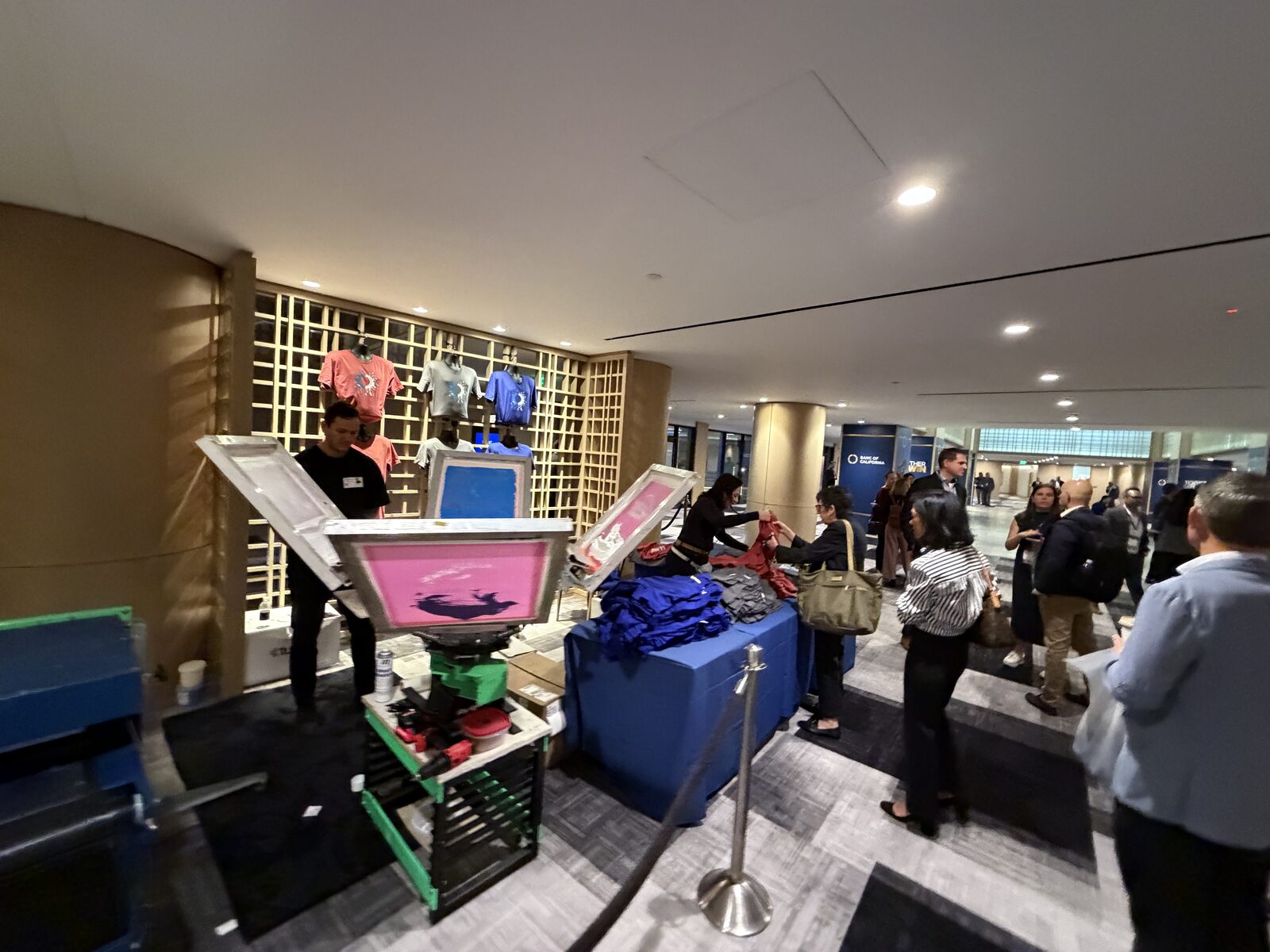
Why there is no flat price
A merch activation is priced like a production, not a product. The same crew can run a $5,000 half-day station or a five-figure multi-line festival build. Understanding the levers lets you dial the experience to the budget instead of guessing.
Lever one: station count
This is the biggest one. One live DTF line is the baseline. Every station you add — a second press line, a hat bar, embroidery, laser — brings its own equipment and its own operator. More stations buy more parallel throughput, which is exactly what a big crowd needs, but they move the number the most.
Lever two: staffed hours
Crew time runs around $250 per hour and covers load-in, live operation, breaks, and teardown. A long event day or an early load-in adds billable hours before a single guest arrives, so the event schedule matters as much as the door count.
Lever three: product and volume
Blanks are not created equal. A Bella+Canvas tee, a Richardson 112 cap, a hoodie, and a hard good all price differently, and total pieces set the material spend. If you are giving away a thousand pieces, product cost becomes a real line item.
Lever four: artwork and prep
A single-design activation needs little prep. A multi-design program with tight brand color-matching needs more. This work happens before the event and is easy to underestimate when you are only picturing the floor.
Lever five: travel
Local Southern California events carry no travel fee. Outside Orange County, LA, and San Diego, a travel fee of about $900 applies, and nationwide programs are quoted per city for freight and crew. Distance is a knob, not a mystery.
How to use this
Tell us the ceiling and the priority, and we will tune these five levers to hit it. Usually that means adjusting station count and hours rather than gutting the experience.
Scope an activation
Put the plan to work.
Send the event, the audience, the city, and the date. We come back with a station plan, a throughput target, and a budget you can hand to the client.